


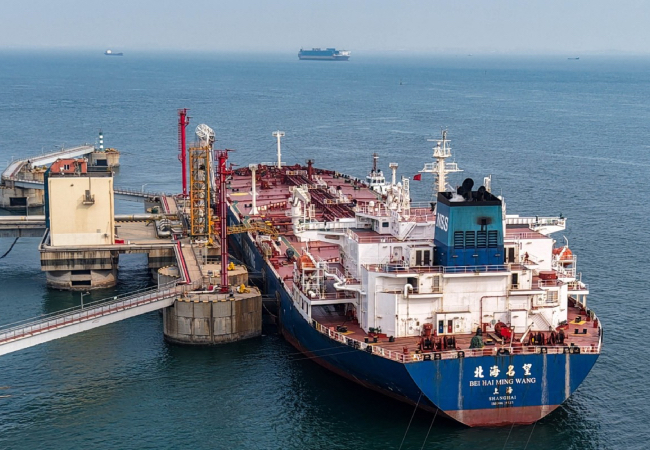
Global oil prices surged past the $100 mark on Thursday as renewed Iranian attacks on shipping and energy facilities in the Gulf intensified fears of a major disruption to global energy supplies.
Although leading economies attempted to calm markets by releasing crude oil from their strategic reserves, the move did little to ease concerns among traders. The spike followed remarks by Donald Trump, who said preventing Iran from acquiring nuclear weapons was a greater priority than keeping oil prices low.
According to the International Energy Agency, the ongoing conflict in the Middle East is causing what could become the most severe disruption ever recorded in the global oil market. The agency’s member countries recently agreed to release about 400 million barrels of oil from their emergency reserves — the largest coordinated release in history.
Despite this intervention, market anxiety remains high. Iran’s retaliatory strikes have effectively shut down the Strait of Hormuz, a critical shipping route through which roughly 20 percent of the world’s crude oil supply normally passes.
Further escalating the situation, two oil tankers were attacked off the coast of Iraq, leaving at least one crew member dead. Another cargo vessel reportedly caught fire after being struck by shrapnel.
In its latest assessment, the IEA estimated that global crude production has dropped by about eight million barrels per day, with an additional two million barrels per day in petroleum products also affected. Together, this represents roughly 7.5 percent of total global supply.
The international benchmark, Brent North Sea crude, climbed as high as $101.59 per barrel before easing slightly. Even so, oil prices remain about 38 percent higher than they were before the conflict erupted nearly two weeks ago, when the United States and Israel carried out airstrikes against Iran.
Market analysts say the continuing attacks in the Gulf have shaken confidence in global energy security. They also point to Washington’s struggle to restore safe passage through the Strait of Hormuz as a sign that its influence over regional shipping lanes has limits.
The IEA’s reserve release is roughly equivalent to 20 days’ worth of oil that normally passes through the Strait of Hormuz, yet analysts say the measure has so far failed to calm the market.
The surge in oil prices is already affecting the aviation sector. Air New Zealand has announced plans to cancel about 1,100 flights over the next two months, while Cathay Pacific introduced new fuel surcharges on most routes. Meanwhile, Air France-KLM said ticket prices would increase to offset higher fuel costs.
Economists warn that prolonged high oil prices could trigger a new wave of global inflation, potentially slowing economic growth worldwide.
Financial markets also reacted negatively to the crisis. Major stock indices in the United States opened lower, with the Dow Jones Industrial Average falling by more than one percent. European markets also slipped, while most Asian exchanges closed in the red.
At the same time, the U.S. dollar strengthened against several major currencies as investors sought safer assets amid growing uncertainty.
Market snapshot (around 13:30 GMT):
Brent crude: Up 8.7% to $99.94 per barrel
West Texas Intermediate: Up 8.6% to $94.77 per barrel
Dow Jones: Down 1.1% to 46,879.88
S&P 500: Down 0.8% to 6,720.28
Nasdaq Composite: Down 0.9% to 22,522.95
European markets also declined, with London’s FTSE 100, Paris’s CAC 40, and Frankfurt’s DAX all posting losses. Asian indices, including Tokyo’s Nikkei 225 and Hong Kong’s Hang Seng Index, also finished lower.
Currency markets reflected the growing uncertainty as well, with the U.S. dollar gaining strength on expectations of prolonged inflation and higher interest rates.